August 1st, 2026 |
When a Tree Falls: Understanding a Property Owner’s Responsibility
By Attorney Mike Bertling
Reading Time: 3 minutes
Property owners can face liability in a variety of situations, including some that may seem unexpected.
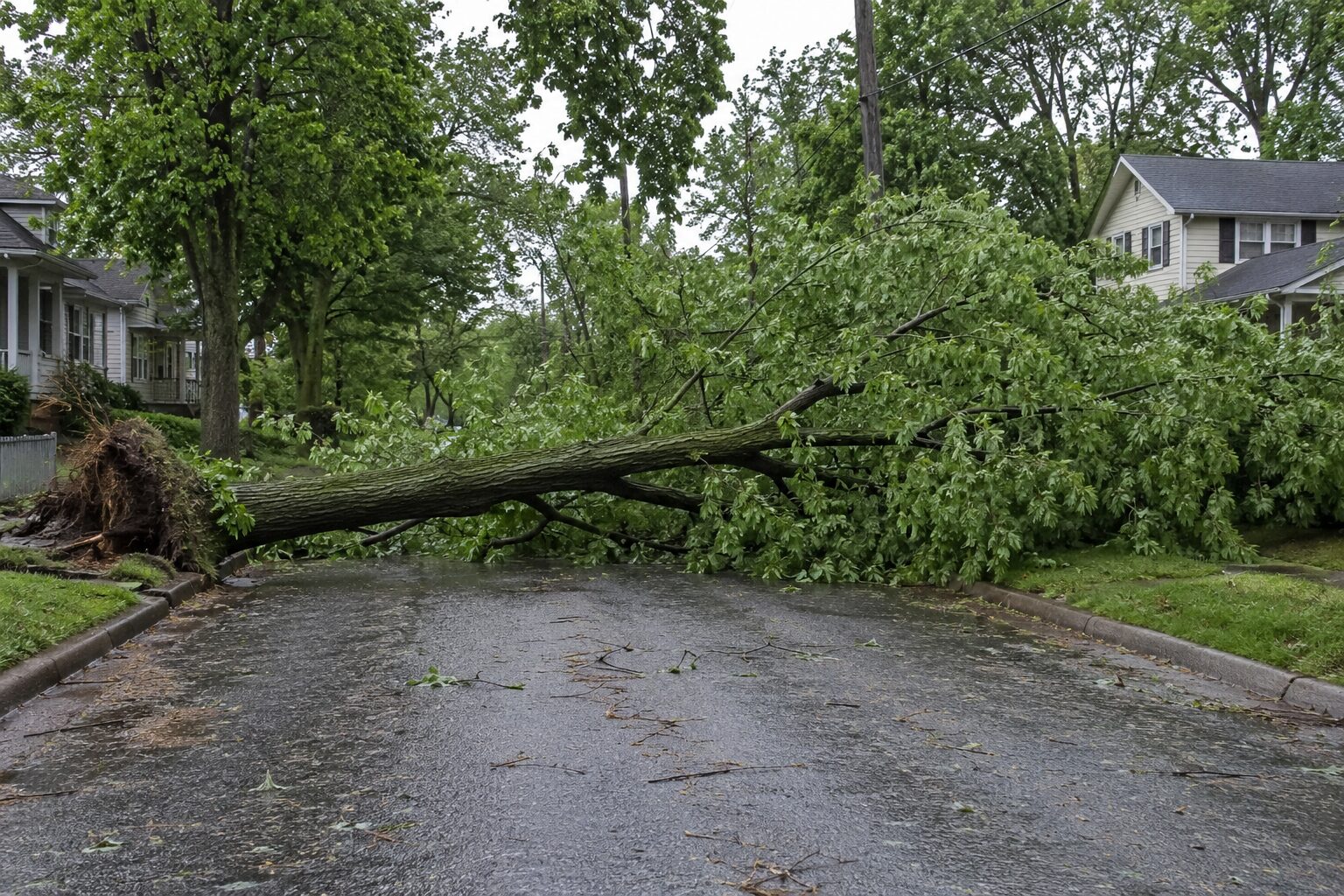
A recent accident in Waukesha County illustrates this fact. In the fall of 2016, the area was experiencing gusty winds. At the same time, a property owner’s neighbor was cutting his grass. A gust of wind struck a stand of trees at precisely the wrong moment. This gust caused a tree to blow over and fall on the neighbor. This caused serious injuries leading to his death. Litigation ensued.
The property owner’s potential liability comes from whether they knew or should have known that the tree was dead. Apparently, there were indications it was. Therefore, the theory of liability is that a reasonably prudent landowner would remove the dead tree, knowing that at some point, it could fall, creating a hazard to individuals in the area.
This same logic would apply to large branches. In other words, a property owner must exercise reasonable care in paying attention to the condition of their property.
This does not mean that a property owner is automatically responsible for any injury occurring on their property. I have had many calls from individuals inquiring about whether their neighbor is liable for their child’s injury which occurred when he or she fell from a swing set or other toy. As I explain, simply because something happens on someone’s property does not make them liable. The property owner must have done something wrong to create responsibility.
As one might imagine, one of the largest areas of property owner responsibility is individuals who slip and fall on ice and snow. I receive many phone calls each winter from individuals injured on someone else’s property due to such a fall. Careful analysis of the facts is necessary to determine whether liability exists.
Again, the accumulation of ice and snow on someone’s property does not automatically make them liable for someone falling. Ice and snow are a common expected hazard in Wisconsin. A property owner is not required to immediately and continuously remove ice and snow during a weather event. It is only when an inordinate amount of time passes and nothing is done that it can create liability. However, it has been my experience that pursuing a claim against a homeowner for a fall like that is very difficult.
If the case does not settle, it will go to a jury. As one might imagine, jurors in Wisconsin are very reluctant to find fellow homeowners responsible whenever an individual slips and falls on their property. I suspect it is because each juror puts themselves in the position of the defendant. They then ask themselves whether they, too, can be held liable if they are a little late in clearing their driveway or sidewalk.
A different set of circumstances, however, arises when ice and snow are on business property. The law in Wisconsin places a higher duty on businesses with respect to making their property safe. Because their doors are open for profit, the law requires them to do more to keep those who come upon their property to create those profits safe. This is called the Safe Place Statute.
The bottom line is a private property owner is only required to do what another property owner would do under the same or similar circumstances. In that the final decision about what is required could end up in the hands of fellow private property owners on a jury, establishing liability can be difficult. Nonetheless, it can occur, and it is in everybody’s best interest to be on the lookout for potentially dangerous conditions which create an unreasonable risk of harm to individuals.
Read more